






Crypto Video Poker Summary
- RTP: 98.4–99.54% RTP (highest across casino categories)
- House edge: 0.46–1.6%
- High volatility (6/6)
- Strategy execution matters (optimal play charts exist, unlike slots)
- Single-player poker mechanics without the bluffing
Video Poker RTP Deep-Dive
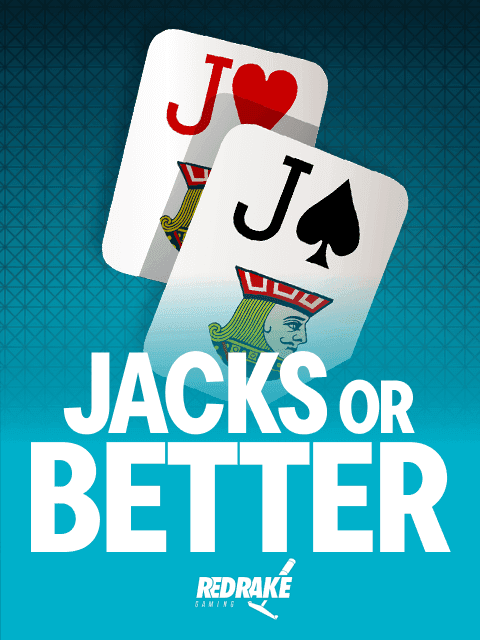
99.54% RTP isn't marketing. It's Jacks or Better from Pragmatic Play with optimal strategy. That's 0.46% house edge—lowest in the casino outside blackjack card counting.
Compare: average video slot runs 96% RTP (4% house edge). Video poker cuts that by 87%. Over 10,000 hands at $1, that's $46 in expected losses vs $400 on slots.
But here's the catch. Optimal play. Deviate from strategy charts—hold a low pair over a four-to-flush draw because it feels right—and your 99.54% RTP drops to 97%. That 2.54% mistake costs $254 per 10,000 hands. Not theoretical. Measurable.
NetEnt's Jacks or Better Double Up runs 98.4% RTP with 1.6% house edge. Still beats most slots. Still requires optimal play. The category punishes improvisation.
Video Poker is a High-Volatility Game
High volatility means payout distribution skews toward rare large wins. Royal flush pays 800:1 (or 4,000:1 on max bet). That's where your RTP lives—in outcomes you'll see once every 40,000 hands.
Standard slot volatility spreads across 1-6 scale. Video poker clusters at 6. Every title. This isn't variance—it's structural design. Your bankroll requirements scale accordingly.
Bankroll minimum: 200x average bet for video poker vs 50x for low-volatility slots. Same session length, 4x capital requirement. If you're betting $1 per hand, you need $200 working capital to survive variance. Drop below that and you're gambling on short-term luck instead of long-term math.
Quick tangent: gambling on luck sounds redundant, but video poker splits into two games. Short-term (under 5,000 hands): pure variance, anything happens. Long-term (50,000+ hands): RTP converges, strategy edge compounds. Most players quit somewhere in between, never reaching the mathematical certainty zone.
Back to volatility. Hit ratio runs ~45%—every 2.2 hands wins something. High compared to slots (20-30% hit ratio), but most wins return less than your bet. Pair of jacks pays 1:1. You're treading water. The session lives or dies on hitting two pair (2:1), trips (3:1), or better.
Evolution Gaming's First Person Video Poker runs identical math: 99.54% RTP, 0.46% house edge, same paytable structure. Provider doesn't matter here. The math is the math.
Video Poker Strategy: How to Maximize Your Upside
Hold/discard decisions follow non-negotiable optimal play. This isn't poker psychology—no reads, no bluffing, no adjusting to opponent tendencies. Pure combinatorics.
Priority hierarchy:
- Royal flush draw (4/5 suited AKQJ10) — hold always, discard everything else
- Straight flush draw — hold
- Four of a kind or better — hold (obviously)
- Four-to-royal — discard full house to chase royal
- Full house, flush, straight — hold
- Three of a kind — hold, draw two
- Four-to-straight-flush — hold
- Two pair — hold
- High pair (jacks or better) — hold, draw three
- Four-to-flush — hold
- Low pair (tens or worse) — hold, draw three
- Four-to-outside-straight — hold
- Three-to-royal-flush — hold
- High cards — depends on combination
That's simplified. Full optimal strategy charts run 20+ decision branches. Memorize or print them. Deviation costs RTP.
Example: You're dealt J♠ Q♠ K♠ 7♦ 2♣. You have a three-to-royal (J-Q-K suited) and two high cards. Optimal play: hold all three suited royals, discard the 7 and 2. Most players hold just J-Q-K, which cuts EV by 8%. Over 10,000 hands, that's $80 in lost value.
The category rewards system-following, not creativity. If you want decision-making freedom, play live poker.
Why Single-Player Matters More Here
Video poker attracts players who want poker mechanics without social friction. No bluffing pressure. No table image management. No adjusting to opponents who play incorrectly and get rewarded anyway.
Single-player mode isolates strategy execution. You vs the RNG. 200+ hands per hour vs 30 in live poker—7x speed. That compression amplifies both skill edge and bankroll variance.
Session structure implications:
- 1-hour session = 200 hands
- At $1/hand, expect 90 wins (~$90 back)
- Expect $1.10 net loss (99.54% RTP means $199.54 returned per $200 wagered)
- Actual result: anywhere from -$80 to +$120 due to volatility
Standard deviation runs high because of the royal flush lurking in the payout table. Hit one royal in 200 hands (0.5% chance)? Session swings +$800. Miss it across 10,000 hands (29% probability)? You're grinding through negative expectation without the offsetting jackpot.
Crypto dynamics change nothing about the math but everything about session flow. Traditional casinos impose 24-72 hour withdrawal holds. Acebet processes blockchain payouts in 10-15 minutes, often under 60 seconds. That structural difference matters when you're chasing optimal RTP across high-variance swings—you're not trapped in a losing session by fiat processing delays.
Paytable Variance Nobody Discusses
All video poker isn't created equal. Paytable structures determine actual RTP despite identical game names.
Full pay Jacks or Better:
- Full house: 9:1
- Flush: 6:1
- RTP: 99.54%
Short pay Jacks or Better:
- Full house: 8:1
- Flush: 5:1
- RTP: 97.3%
2.24% RTP difference. Over 10,000 hands at $1, that's $224. Same game name. Different math. Most players never check the paytable—they see Jacks or Better and assume consistency.
Acebet pulls verified builds directly from Pragmatic Play, NetEnt, and Evolution Gaming. 99.54% shown is 99.54% played. No operator RTP selection games where casinos choose lower paytables from the same provider package.
Double-up gamble feature: Jacks or Better Double Up adds red/black doubling after wins. 50/50 odds, no house edge on the gamble itself. But it compounds variance—win $20, gamble it, lose, and you're down $20 instead of up $20. Pure risk tolerance decision. Strategy doesn't apply here. Math is neutral. Discipline.
Highest RTP Video Poker Games
Top 3 by return to player:
- Jacks or Better (Pragmatic Play) — 99.54% RTP, 0.46% house edge, Vol 6
- Jacks or Better Double Up (NetEnt) — 98.4% RTP, 1.6% house edge
- First Person Video Poker (Evolution Gaming) — 99.54% RTP, 0.46% house edge
All three support demo play except Jacks or Better. Use demos to drill optimal strategy before risking capital.
What Category Comparison Reveals
Video poker occupies a unique position: higher RTP than slots (avg 96%), lower than perfect-strategy blackjack (99.5%+), but with zero social pressure and 7x session speed vs live dealer games.
House edge benchmarks:
- Video poker (optimal play): 0.46%
- Blackjack (basic strategy): 0.5%
- Slots: 2-8%
- Roulette: 2.7% (European), 5.26% (American)
- Baccarat: 1.06% (banker), 1.24% (player)
Video poker delivers second-best mathematical expectation in the casino. But volatility 6/6 requires discipline and bankroll depth most players underestimate.
If you want lower variance with similar RTP, blackjack and baccarat offer steadier rides. If you want pure volatility without strategy requirements, crash games deliver faster session resolution. Video poker sits between: strategy execution rewarded, variance punishing, math transparent.
Recent Wins
Acebet.co is owned and operated by Golden Frog Inc., a company incorporated under the laws of the Autonomous Island of Anjouan, Union of Comoros, with Registration Number 15831. Acebet.co is authorized to conduct online gaming operations by the Anjouan Offshore Financial Authority.
Payment Processing: Financial transactions are managed by 51 Plus One Ltd, registered at Archiepiskopou Kyprianou, 100, Office 2, Strovolos, Nicosia, 2059, Cyprus.
Fairness Verification: Acebet.co operates under a strict Provably Fair protocol. All game outcomes can be independently verified using our Fairness Tools and client-seed customization.
You must be over 18 or the age of majority in your jurisdiction to interact with the website.